
Can LASIK Remove Both Distance and Reading Glasses for All Patients?
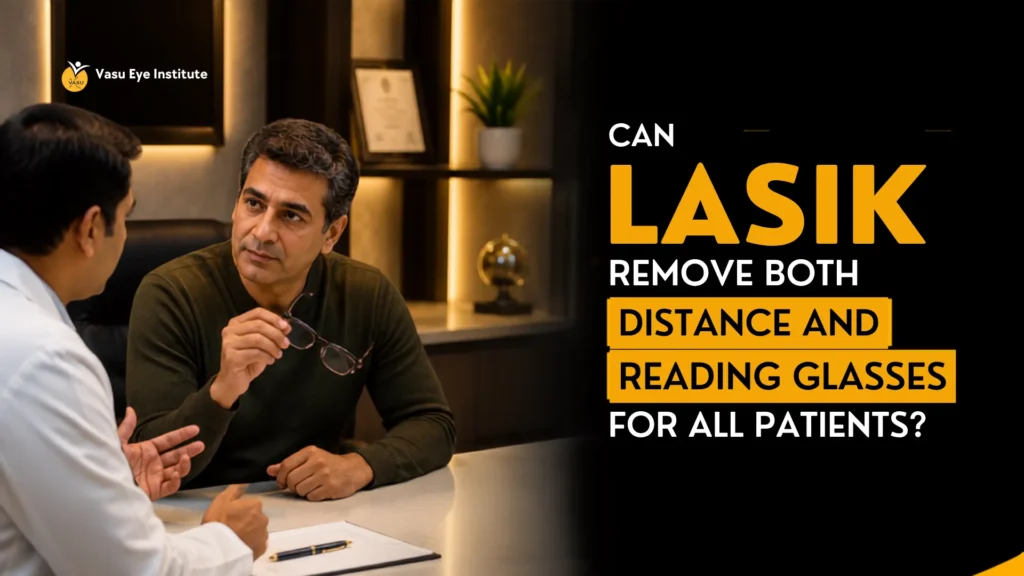
LASIK is one of the most effective vision correction procedures available today and has helped millions of people reduce their dependence on glasses and contact lenses. However, one of the most common misconceptions about LASIK is that it can completely eliminate the need for all types of glasses for every patient.
The reality is more nuanced. LASIK is highly effective at correcting distance vision in suitable candidates, but whether it can remove both distance and reading glasses depends on factors such as age, eye condition, and the presence of presbyopia.
At Vasu Eye Institute, every patient undergoes a detailed eye evaluation to determine the most appropriate vision correction solution based on their lifestyle, visual needs, and eye health.
How LASIK Corrects Distance Vision and Improves Daily Life
LASIK works by reshaping the cornea so that light focuses correctly on the retina. This helps correct refractive errors such as myopia, hyperopia, and astigmatism.
The primary goal of vision correction with laser technology is to improve unaided vision and reduce dependence on spectacles or contact lenses.
Common Benefits of LASIK
- Clearer distance vision.
- Reduced dependence on glasses.
- Reduced dependence on contact lenses.
- Improved visual comfort during daily activities.
- Quick recovery in suitable patients.
- Long-lasting vision correction.
Many patients choose LASIK because of the numerous laser surgery benefits it can provide. Activities such as driving, travelling, sports, and everyday tasks often become more convenient when dependence on glasses is reduced.
For patients with suitable eye conditions, LASIK can significantly improve distance vision and enhance overall quality of life.
Who Is a Suitable Candidate for LASIK to Reduce Dependence on Glasses?
Not everyone who wears glasses is automatically a candidate for LASIK. Treatment suitability depends on several medical and lifestyle factors.
A comprehensive eye examination typically evaluates:
- Refractive error.
- Corneal thickness.
- Corneal shape.
- Tear film quality.
- Eye health.
- Retinal health.
- Prescription stability.
- Age.
Suitable candidates often include individuals who:
- Have stable spectacle power.
- Have healthy corneas.
- Have realistic expectations.
- Want to reduce dependence on glasses or contact lenses.
- Are medically suitable for laser vision correction.
The effectiveness of vision correction with laser depends on selecting the right candidates and choosing the most appropriate treatment plan.
While LASIK can significantly reduce the need for distance glasses, age-related changes in vision can still influence whether reading glasses may be required later in life.
Why Reading Glasses May Still Be Needed After LASIK for Some Patients
One of the most important facts patients should understand is that LASIK does not stop the natural ageing process of the eye.
As people enter their 40s and beyond, the natural lens inside the eye gradually loses flexibility. This condition is called presbyopia treatment when managed through different vision correction approaches.
Presbyopia affects the eye’s ability to focus on nearby objects, making tasks such as reading, using a mobile phone, or viewing small print more difficult.
Common signs of presbyopia include:
- Holding reading material farther away.
- Difficulty focusing on near objects.
- Eye strain during reading.
- Increased need for brighter lighting.
- Blurred near vision.
Even when LASIK successfully corrects distance vision, reading glasses may still be required if presbyopia develops later.
This is why LASIK may not completely eliminate the need for all glasses in every patient.
Understanding Presbyopia and Near Vision
Unlike myopia or astigmatism, presbyopia is a natural age-related change rather than a refractive error alone.
Several options may help address near vision concerns:
- Reading glasses.
- Multifocal contact lenses.
- Monovision LASIK in selected cases.
- Advanced vision correction procedures.
- Specific presbyopia treatment options based on individual suitability.
The most appropriate solution depends on age, lifestyle, occupation, and visual requirements.
Where to Go for Expert LASIK Evaluation and Advanced Vision Correction Solutions
A detailed eye examination is essential before deciding whether LASIK is the right treatment option.
At Vasu Eye Institute, LASIK evaluations include:
- Comprehensive vision assessment.
- Corneal topography.
- Corneal thickness measurement.
- Refraction testing.
- Retinal examination.
- Tear film analysis.
- Lifestyle and visual requirement assessment.
Patients interested in laser eye surgery for presbyopia often require a different discussion than younger LASIK candidates because near vision requirements become increasingly important with age.
In some situations, alternatives to standard LASIK may be considered depending on the patient’s visual goals and the degree of presbyopia present.
Presbyopia Correction Options
Several solutions may be considered for near vision management:
- Reading glasses.
- Contact lenses.
- Monovision correction.
- Advanced refractive procedures.
- Selected presbyopia correction lens options based on individual needs.
The most suitable option depends on detailed clinical evaluation and lifestyle expectations.
At Vasu Eye Institute, treatment recommendations are personalised rather than standardised. Every patient receives guidance based on eye health, age, visual requirements, and long-term expectations.
While LASIK is highly effective for correcting distance vision, it is important to understand that age-related changes such as presbyopia can still affect near vision later in life. A comprehensive eye evaluation helps determine whether LASIK alone is sufficient or whether additional solutions may be needed for near vision management.
FAQs
LASIK can significantly reduce dependence on glasses for distance vision in suitable candidates. However, age-related conditions such as presbyopia may still require reading glasses later, even after successful LASIK treatment.
LASIK primarily corrects refractive errors affecting distance vision. In selected cases, specialised approaches may help address near vision, but suitability depends on age, eye condition, and individual visual requirements.
Reading glasses may be needed because LASIK does not prevent presbyopia, a natural age-related condition that affects the eye's ability to focus on nearby objects.
Presbyopia is an age-related condition in which the natural lens gradually loses flexibility, making it harder to focus on near objects such as books, phones, and small print.
Many patients over 40 can still be suitable candidates for LASIK. However, the presence of presbyopia and near vision requirements should be carefully evaluated before treatment.
A detailed eye examination including corneal evaluation, refraction testing, and overall eye health assessment helps determine whether LASIK is the most suitable vision correction option.
Yes. Depending on the patient's age, lifestyle, and eye condition, options may include reading glasses, contact lenses, monovision correction, advanced refractive procedures, or selected presbyopia management solutions.
Choose a hospital that offers advanced diagnostic technology, experienced refractive specialists, personalised treatment planning, and comprehensive post-operative care. A detailed evaluation helps ensure the most appropriate vision correction recommendation.