
What is Phacoemulsification Cataract Surgery & How It Works

Cataract is a condition in which the natural lens of the eye becomes cloudy, leading to blurred vision, glare from lights, reduced contrast, and difficulty performing daily activities such as reading or driving. It is one of the most common causes of vision impairment, especially with increasing age. As the cataract progresses, vision gradually worsens and cannot be corrected with glasses or medication.
One of the most advanced and widely used treatment methods today is cataract surgery by phaco, a modern technique designed to remove the cloudy lens safely and improve vision. Many patients searching for “what is phaco eye surgery” want to understand how this procedure works and whether it is the right option for them. At Vasu Eye Institute, phaco surgery is considered the standard and most preferred method due to its precision, safety, and faster recovery.
In most cases, cataract removal is combined with phaco with IOL surgery, where the natural lens is replaced with a clear artificial intraocular lens. This lens helps improve focusing ability and overall visual clarity, allowing patients to return to normal activities with better vision.
What is Phacoemulsification Cataract Surgery?
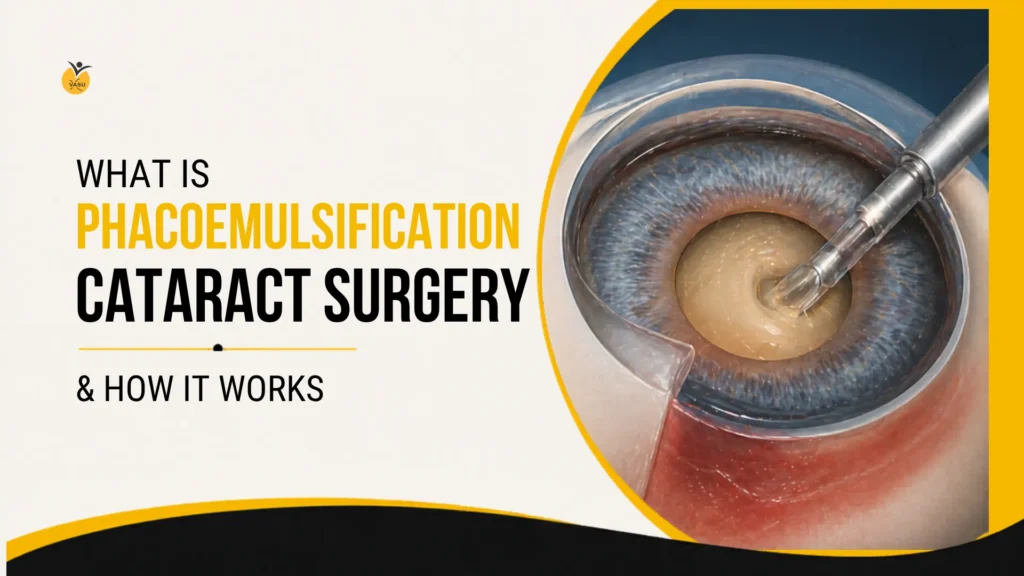
Phacoemulsification is a modern cataract surgery technique that uses ultrasound energy to break the cloudy lens into very small fragments, which are then gently removed from the eye. This technique allows cataract removal through a very small incision, making the procedure minimally invasive and more comfortable for patients.
In this method, a tiny incision of approximately 2.8 mm is made in the cornea. Through this opening, a specialised ultrasonic probe is inserted. The probe emits high-frequency vibrations that break the cataract into fine pieces, which are then suctioned out.
After removing the cloudy lens, an artificial intraocular lens is implanted inside the eye. This complete process is known as phacoemulsification cataract surgery with intraocular lens implantation. The implanted lens remains permanently in the eye and helps improve clear and stable vision.
Patients often ask about phaco eye surgery cost or phaco eye surgery lens price, which can vary depending on the type of intraocular lens selected. The cost of treatment depends on whether standard or advanced lenses are used, along with the technology involved in the procedure.
How Phacoemulsification Works
Understanding “what is phaco eye surgery” becomes easier when looking at the step-by-step process followed during the procedure.
- A small incision is created in the cornea
- An ultrasonic probe is inserted into the eye
- The cloudy lens is broken into tiny fragments using ultrasound waves
- The fragments are removed through gentle suction
- A foldable intraocular lens is inserted in place of the natural lens
The procedure is typically completed within 15–30 minutes and is performed as a day-care surgery, meaning patients can return home the same day.
At Vasu Eye Institute, advanced systems such as AI-guided technology are used to improve precision during surgery. These systems help ensure accurate lens placement and better visual outcomes. The use of modern equipment reduces surgical risks and supports faster recovery.
Benefits of Phacoemulsification Cataract Surgery
Phacoemulsification offers several advantages, making it the preferred choice for cataract treatment.
- Small incision surgery that heals quickly
- No stitches required in most cases
- Faster visual recovery compared to traditional methods
- Minimal discomfort during and after surgery
- High precision and safety with advanced technology
- Better visual outcomes with intraocular lens implantation
Patients undergoing phaco with IOL surgery often experience significant improvement in vision within a short time. Many individuals are able to resume routine activities quickly after the procedure.
Another key benefit is reduced hospital stay, as the surgery is usually completed within a few hours, making it convenient for patients.
Risks and Complications of Phacoemulsification Cataract Surgery
Phacoemulsification cataract surgery is considered very safe and effective, but like any medical procedure, there are some risks involved.
Possible risks include:
- Mild irritation or discomfort after surgery
- Temporary blurred vision
- Sensitivity to light
- Dryness in the eyes
- Inflammation or swelling (rare)
- Infection (very rare cases)
These symptoms are usually temporary and improve with proper care and medication. Serious complications are uncommon, especially when the procedure is performed using advanced technology and by experienced ophthalmologists.
Following the doctor’s instructions carefully plays an important role in preventing complications and ensuring smooth recovery.
Recovery After Phacoemulsification Surgery
Recovery after phaco with IOL surgery is generally quick and smooth for most patients. Vision improvement usually begins within a few days after the procedure.
- Patients can return home on the same day
- Light activities can be resumed within 24–48 hours
- Vision gradually improves over the first week
- Complete healing may take a few weeks
During the recovery period, patients may experience mild discomfort, watering, or light sensitivity. These symptoms are part of the normal healing process and usually improve with time.
Doctors usually recommend:
- Using prescribed eye drops regularly
- Avoiding rubbing the eyes
- Protecting the eyes from dust and water
- Wearing protective eyewear if needed
- Attending follow-up visits as advised
Proper care after surgery ensures stable vision and reduces the chances of complications.
Best Hospital for Phacoemulsification Cataract Surgery
Choosing the right hospital is essential for achieving safe and effective cataract surgery outcomes. A hospital with advanced diagnostic technology, experienced surgeons, and personalised treatment planning can help ensure better surgical precision and patient care.
At Vasu Eye Hospital, Bathinda, phacoemulsification cataract surgery is performed using modern techniques and advanced diagnostic systems. The hospital uses AI-guided ZEISS Callisto Suite technology, which helps improve precision, accuracy, and safety during surgery.
The specialists carefully evaluate each patient’s eye condition before recommending treatment. Patients are guided in selecting the most suitable intraocular lens based on their visual needs and lifestyle. Whether it involves standard lenses or advanced options, the focus remains on delivering clear vision and long-term comfort.
With experienced ophthalmologists and a strong focus on patient care, Vasu Eye Hospital provides reliable and effective cataract treatment for both local and international patients.
FAQs
It is a modern cataract procedure where the cloudy lens is broken using ultrasound and replaced with an artificial lens.
The surgery usually takes around 15–30 minutes and is performed as a day-care procedure.
No, it is performed under local anaesthesia, so patients do not feel pain during the procedure.
Most patients notice improvement within a few days, while complete recovery may take a few weeks.
Yes, it is one of the safest and most effective cataract procedures when performed by experienced surgeons.