

Children may not know that their vision is unclear. Learn how screening differs from a full examination, what signs to notice and when a child should be assessed sooner.
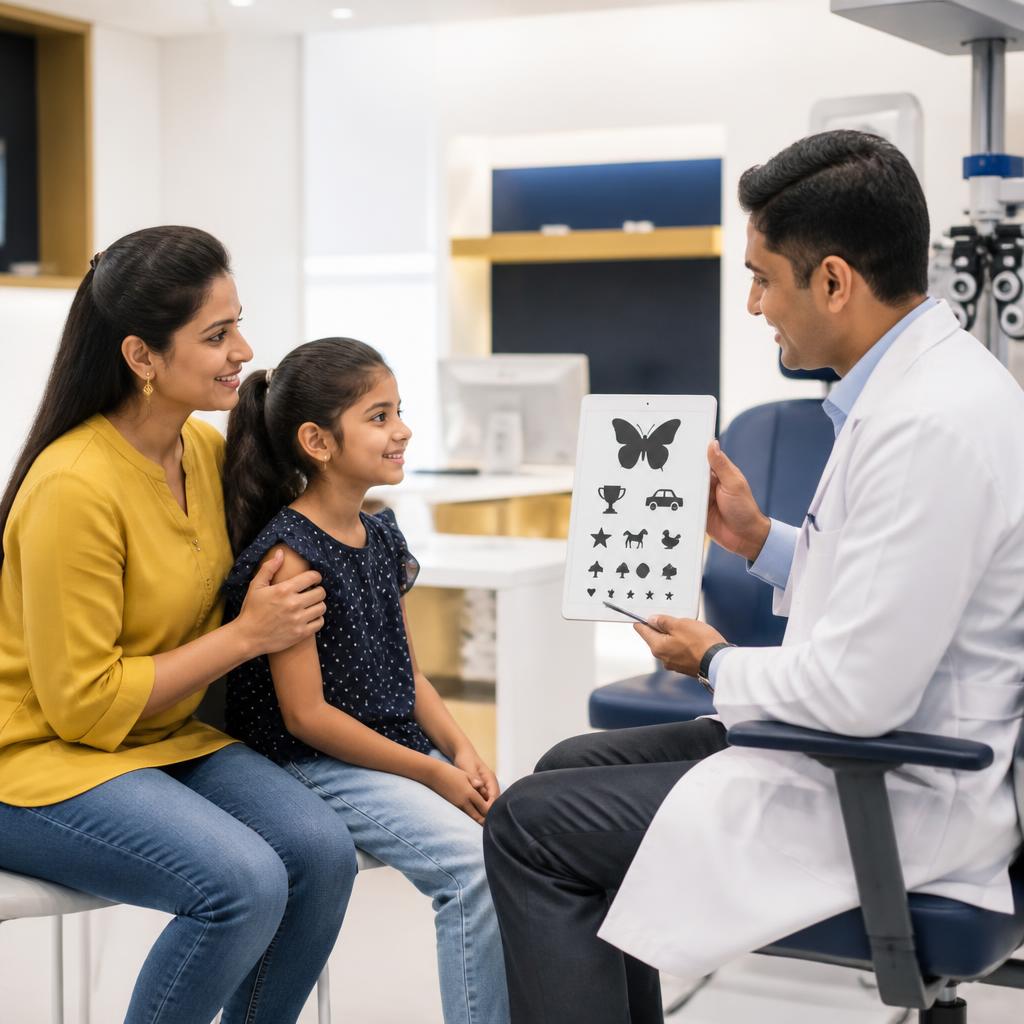
Children do not always know when their vision is unclear. A child who sees the classroom board poorly may move closer, lose interest in reading or copy a classmate rather than explain the problem. Some eye conditions cause few obvious symptoms, and a child may assume that everyone sees the world the same way. Knowing when to arrange screening or a complete eye examination helps parents respond early and supports healthy visual development.
This guide offers general information for families. The right schedule depends on a child’s age, development, symptoms, medical history and local clinical guidance. If you have a specific concern, ask a qualified eye-care professional rather than relying only on a general age chart.
Vision screening is a brief check designed to identify children who may need further assessment. It can be offered during routine child-health visits or at school, depending on local services. Screening is useful, but it is not a full diagnosis. If a child does not pass, the next step is an appropriate eye examination rather than assuming the screening itself explains the problem.
A comprehensive examination is more detailed. Depending on a child’s age and needs, an eye-care professional may assess visual behaviour, visual acuity, eye alignment and movement, pupils, the front of the eye and internal eye health. Drops may be used when clinically indicated to relax focusing or widen the pupils. This can help the clinician measure refractive error more accurately and examine the back of the eye.
Not every child who passes a routine screen necessarily needs a complete examination every year. Recommendations depend on age, symptoms, risk factors and screening results. Parents should follow local paediatric and eye-care guidance, and should not delay a review when a concern is present simply because a child passed an earlier screen. Screening is a snapshot; symptoms can start later.
A child’s eyes are assessed soon after birth as part of routine newborn care. During infancy and early childhood, healthcare professionals look for signs that the eyes are developing and working as expected. Further screening is recommended at appropriate well-child visits and during preschool and school years. Exact schedules differ between health systems, so parents should ask their paediatrician or eye-care professional about the recommended timing in their situation.
A complete eye examination may be needed sooner when a child has an abnormal screening result, a visible eye concern, a family history of certain eye conditions, prematurity or another risk factor identified by a clinician. An eye that turns in or out, persistent tearing, unusual light sensitivity, poor visual tracking or an abnormal red reflex should be discussed promptly with a professional.
For school-age children, periodic screening is useful because short-sightedness can develop as children grow. If a child struggles with distance vision, sits unusually close to a screen or board, or reports blur, do not wait for the next routine screening appointment. Ask whether a complete assessment is needed.
There is no single appointment age that suits every child. The most useful approach is to keep routine child-health and vision checks, take a failed screen seriously and speak up when a parent or teacher notices a persistent change.
Children may squint, close one eye, tilt their head, hold books close, sit near the television or avoid activities that require distance vision. They may complain of headaches or tired eyes, lose their place while reading or seem less confident in sports that involve tracking a ball. These behaviours have many possible explanations, but persistent patterns are worth discussing with an eye-care professional.
Watch for eye misalignment, repeated eye rubbing, unusual sensitivity to light, frequent tearing, persistent redness or a white-looking pupil in photographs or normal light. A white pupil or sudden change in eye appearance needs urgent medical assessment. Sudden loss of vision, severe pain or an injury also requires urgent care.
Some children have a vision problem in one eye and use the other eye to compensate. They may still manage many everyday tasks, so adults do not notice until screening or a complete examination finds the problem. This is one reason age-appropriate screening matters even when a child does not complain.
Ask teachers for specific observations: Does the child move seats to see the board? Do they copy from a nearby student? Do they lose their place or avoid reading? Such observations help the clinician understand when and where the difficulty occurs. They do not replace an eye examination, but they can make the history more useful.
Vision develops during childhood. If one eye consistently provides a blurred image or the eyes do not align properly, the brain may begin to favour one eye. Amblyopia, often called lazy eye, is reduced vision in an eye that has not developed normal visual function. It can be associated with unequal refractive errors, strabismus or an obstruction such as a cataract. Early diagnosis matters because treatment is generally more effective while the visual system is still developing.
Uncorrected refractive errors can also make school tasks harder. A child who cannot see the board clearly may struggle to copy notes or participate confidently. Vision problems do not explain every learning difficulty, and an eye examination does not replace educational or developmental assessments. However, identifying and managing a visual issue can remove one possible barrier to learning.
Eye alignment problems, congenital cataracts and other conditions may need specialist care. Treatment can range from glasses and patching to medication or surgery, depending on the diagnosis. Parents should not try to treat suspected amblyopia or a squint with home remedies or non-prescription products. The clinician will explain the purpose of any recommended treatment and how progress will be reviewed.
The appointment usually begins with questions about the child’s health, development, family eye history and symptoms noticed at home or school. The clinician may ask whether the child was born prematurely, has had an eye injury or has a condition that can affect vision. Sharing what a teacher has noticed can also help.
The vision test is adapted to the child’s age. Younger children may be assessed by observing how they look at and follow objects, while older children may identify letters, pictures or symbols at a distance. The clinician may check how the eyes move and work together, whether they are aligned, how the pupils respond and whether the front and back of the eyes appear healthy.
Eye drops may be recommended to obtain a more accurate prescription or examine internal structures. They can temporarily blur near vision and make the eyes sensitive to light. Ask the clinic how long the effects may last and whether the child needs any special arrangements after the appointment. A calm explanation, a familiar comfort item and a little extra time can help a nervous child feel at ease.
It is fine if a young child cannot name letters or sit still for a long time. The clinician can use age-appropriate methods and make adjustments. Tell the team if the child is tired, anxious or has communication needs so the visit can be planned accordingly.
No. The need for glasses depends on the type and degree of refractive error, the child’s age, symptoms, eye alignment and visual development. Some children have small amounts of farsightedness that do not require glasses, while others benefit from a prescription to support clear vision or treat a specific condition. Glasses should be prescribed by a qualified professional after an appropriate assessment.
Wearing correctly prescribed glasses does not make a child’s eyes weak. Glasses help focus light so the child can see more clearly. If glasses are prescribed, follow instructions about when they should be worn and attend follow-up visits to check vision and fit. If a child refuses to wear them, check whether the frames are comfortable and speak to the clinician rather than forcing a poor fit.
Children may also need other treatments. Amblyopia management can involve glasses, patching or atropine drops in selected cases. The plan depends on the cause and severity, and progress needs monitoring. Do not copy another child’s treatment or use leftover eye drops.
Myopia, or short-sightedness, makes distant objects look blurry. It often develops during school age and can progress as a child grows. Because blur can develop gradually, a child may not recognise the change. Sitting closer to the board or asking to move seats may be a reason to check vision.
Outdoor time is associated with a lower risk of developing myopia, and parents can encourage children to spend time outside as part of a balanced routine. Breaks during prolonged near work and sensible screen habits can support comfort, but they are not substitutes for an eye examination. If myopia is diagnosed, the eye-care professional can discuss prescription, follow-up and, where appropriate, options intended to slow progression.
Do not use another child’s glasses or rely on an online vision test for a prescription. Children’s prescriptions and eye alignment need proper assessment, especially when vision is changing.
Write down what you have noticed, when it occurs and whether it seems to affect one or both eyes. Ask the child’s teacher about board visibility, reading or classroom behaviour. Bring previous prescriptions, screening reports and details of relevant medical conditions or medicines. If the child already wears glasses, bring them to the appointment.
Explain any family history of squint, amblyopia, childhood cataract, glaucoma or other significant eye disease. If the child is anxious, describe the visit as a series of simple checks rather than promising that no drops or further tests will be needed. After the examination, ask what the findings mean, whether treatment is needed, when to return and which symptoms should prompt earlier review.
Follow the plan even if the child does not complain. Some conditions need monitoring before symptoms become obvious. If recommended glasses are uncomfortable, symptoms persist or the child’s vision seems to change, contact the clinic and ask what to do rather than stopping treatment without advice.
Parents in Bathinda and the Malwa region can seek paediatric eye-care guidance at Vasu Eye Institute & Skin Centre. If a school screen is abnormal, your child has persistent visual symptoms, or you notice an eye turning, unusual pupil appearance or difficulty tracking objects, arrange an assessment. Urgent symptoms such as sudden vision loss, severe pain, a significant injury or a white pupil require prompt medical attention.
A child’s first complete eye examination should be guided by age, screening results, symptoms and individual risk factors. The care team can explain which tests are appropriate and whether follow-up is needed. Early evaluation can help identify refractive errors and eye conditions while treatment may be most effective.
Newborns receive basic eye checks, and screening continues during childhood. A complete examination may be needed earlier for symptoms, risks or an abnormal screening result; ask your child’s healthcare professional about the right schedule.
Follow the recommended screening schedule. A comprehensive examination is especially important if symptoms or risk factors exist, even after a previous normal screen.
Squinting, sitting close to the board, holding books close, blurred distance vision, headaches or difficulty seeing clearly can be clues.
Some eye alignment changes vary with age, but a persistent or newly noticed squint should be assessed. Early evaluation can be important for visual development.
Sometimes. Drops may help measure refractive error accurately or allow the clinician to examine internal structures. The clinic can explain temporary effects.
Prolonged near work may contribute to eye strain and is associated with concerns around myopia, but screen use is not the only factor. Outdoor time, breaks and regular age-appropriate screening are helpful.
Amblyopia can affect visual development, and treatment is generally more effective when started during childhood. The appropriate treatment depends on the cause.
Educational information only; not a substitute for examination, diagnosis or treatment. Follow your child’s clinician and locally recommended screening guidance.