
Common Myths and Facts About Touchless LASIK Surgery

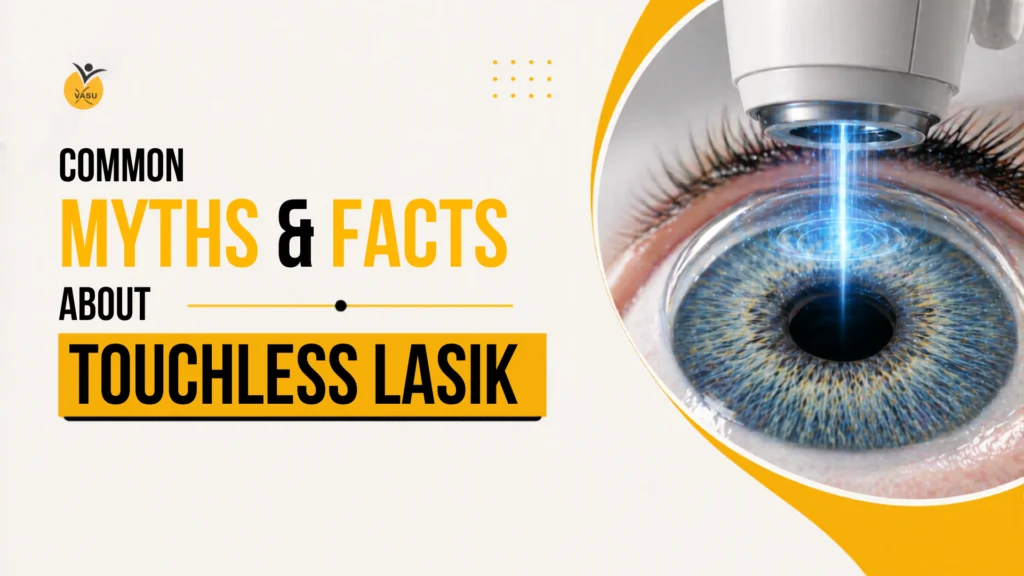
Many people searching for spectacle-free vision first want to understand what is touchless lasik surgery and whether it is better than conventional methods. Touchless LASIK is a modern laser vision correction procedure designed to reduce or eliminate dependence on glasses and contact lenses. It uses fully laser-based technology to reshape the cornea with high precision.
Because patients often hear mixed opinions online, confusion is common. Questions about touchless lasik cost, touchless lasik surgery side effects, age eligibility, comfort, and long-term results are frequently searched. Understanding the real Myths and Facts About Touchless LASIK helps patients make informed decisions based on science, not assumptions.
At Vasu Eye Hospital, Touchless LASIK is performed after detailed eye screening using advanced diagnostic systems. Patients receive expert guidance, personalised treatment planning, and complete follow-up care.
What Is Touchless LASIK Eye Surgery?
Many patients ask what is touchless lasik surgery and how it differs from standard LASIK. Touchless LASIK is a fully laser-based treatment in which advanced laser systems are used to create the corneal flap and reshape the cornea without using a blade.
This is why many people also search for blade free lasik eye surgery. Since no mechanical blade is used, the procedure offers high precision, better comfort, and faster recovery for suitable candidates.
It is commonly used to treat:
- Nearsightedness
- Farsightedness
- Astigmatism
As an advanced laser eye surgery option, it is preferred by many patients who want modern technology with improved comfort and accuracy.
At Vasu Eye Hospital, every patient undergoes suitability testing before recommending touchless lasik eye surgery, ensuring safe and effective results.
Common Myths and Facts About Touchless LASIK
Myth: Touchless LASIK Is Painful
Fact: Touchless LASIK Is a Minimally Invasive and Comfortable Procedure
One of the biggest misconceptions is that laser treatment is painful. In reality, lasik painless eye surgery techniques use numbing eye drops before treatment. Most patients feel only light pressure or mild temporary irritation.
The procedure is usually quick, and discomfort is minimal. This is one of the most important Myths and Facts About Touchless LASIK patients should understand before surgery.
Myth: Touchless LASIK Is Unsafe
Fact: Advanced Laser Technology Makes Touchless LASIK Highly Precise
Some people worry that laser procedures may be unsafe. When done after proper testing, touchless lasik eye surgery is considered safe for eligible patients.
Modern laser systems track eye movement, improve accuracy, and deliver customised treatment. At Vasu Eye Hospital, detailed screening helps determine whether the patient is suitable before proceeding.
This is another common misunderstanding in the discussion around Touchless LASIK.
Myth: Vision Results Are Temporary
Fact: Touchless LASIK Offers Long-Lasting Vision Correction
Many patients believe results only last for a short time. In reality, once the cornea is reshaped, the correction is generally long-lasting for patients with stable numbers.
Natural age-related changes may still occur later in life, but the treatment itself offers durable correction. This is why many people choose advanced laser eye surgery for long-term visual freedom.
Myth: Everyone Can Undergo Touchless LASIK
Fact: Eligibility Depends on Eye Health and Prescription
Not every person is automatically suitable for Touchless LASIK. Final eligibility depends on:
- Stable vision number
- Healthy corneal thickness
- No active eye disease
- Suitable prescription range
- Overall eye health
Many people search for touchless lasik surgery age limit because age matters. In most cases, adults with stable eye numbers are considered, but final approval depends on examination.
This remains one of the most searched Myths and Facts About Touchless LASIK topics.
Why Consulting an Eye Specialist Is Important Before Touchless LASIK
Even the most advanced treatment requires proper planning. A detailed consultation helps determine whether touchless lasik eye surgery is the right option.
Important pre-LASIK tests usually include:
- Vision number testing
- Corneal thickness check
- Dry eye assessment
- Retina examination
- Eye pressure testing
At Vasu Eye Hospital, specialists carefully assess eye health before recommending surgery. Patients are also counselled regarding realistic outcomes, healing time, and touchless lasik surgery side effects such as temporary dryness or glare.
Consultation also helps patients compare available options, understand expected benefits, and make confident treatment decisions.
Why Choose Vasu Eye Hospital for Touchless LASIK?
Choosing the right centre is essential for successful results. At Vasu Eye Hospital, Touchless LASIK is supported by:
- Modern laser technology
- Detailed suitability testing
- Experienced ophthalmologists
- Personalised treatment planning
- Structured follow-up care
- Transparent patient guidance
Patients are also guided regarding touchless lasik cost, expected recovery, and aftercare steps before treatment.
With a focus on safety, precision, and patient comfort, Vasu Eye Hospital offers trusted blade free lasik eye surgery solutions for suitable candidates seeking clear vision.
FAQs
Touchless LASIK uses advanced laser technology instead of mechanical blades, which improves precision and comfort. When performed after proper evaluation on suitable candidates, it is considered a safe and effective vision correction option.
Yes, Touchless LASIK is commonly known as blade-free because laser systems are used instead of surgical blades. This modern approach offers better accuracy, improved comfort, and reduced dependence on older techniques.
Most patients notice clearer vision within 24 hours. Routine work usually resumes in a few days, while complete visual stabilisation may take several weeks depending on healing response and eye condition.
Touchless LASIK can significantly reduce or eliminate dependence on glasses for many suitable patients. However, natural age-related vision changes may still require reading glasses or minor correction later in life.
Adults with stable eye numbers, healthy corneas, suitable prescription range, and no active eye disease are often ideal candidates. Final eligibility is confirmed only after a complete eye examination.
Temporary dryness, glare, watering, light sensitivity, or mild irritation may occur during recovery. These effects usually improve with healing, prescribed eye drops, and proper follow-up care after treatment.