
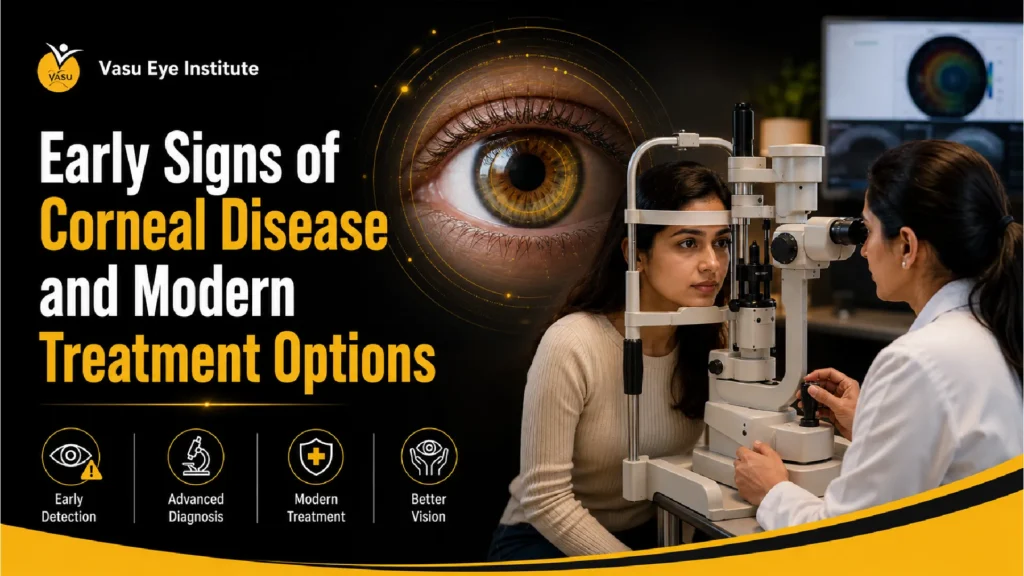
Early Signs of Corneal Disease and Modern Treatment Options

- What Is Corneal Disease and Why Early Detection Matters
- What Are the Early Signs of Corneal Disease?
- Common Causes and Risk Factors for Corneal Disease
- Modern Treatment Options for Corneal Disease
- Medical Treatments for Mild and Moderate Corneal Conditions
- How Corneal Transplant and New Technologies Improve Vision
- Why Choose Vasu Eye Institute for Corneal Disease Treatment?
- FAQs
The cornea is the transparent front layer of the eye that helps focus light and plays an important role in maintaining clear vision. When the cornea becomes damaged, swollen, infected, or irregular, it can affect both visual clarity and eye comfort. Since many corneal conditions develop gradually, recognising corneal disease symptoms at an early stage is important for preserving vision and preventing long-term complications.
Corneal disorders can develop due to infections, injuries, inherited conditions, dry eye disease, or underlying medical problems. Early diagnosis allows treatment to begin before the condition progresses and affects daily activities. At Vasu Eye Institute, specialised corneal evaluation, advanced imaging technology, and expert treatment planning help identify corneal conditions early and guide appropriate treatment.
What Is Corneal Disease and Why Early Detection Matters
Corneal disease refers to a group of conditions that affect the clarity, shape, or function of the cornea. Since the cornea helps focus incoming light, any abnormality can interfere with vision quality and overall eye health.
Early detection is important because untreated corneal disease may lead to:
- Progressive vision loss.
- Persistent eye discomfort.
- Corneal scarring.
- Increased sensitivity to light.
- Reduced quality of life.
Some cornea problems symptoms may appear gradually, while others develop suddenly following an infection, injury, or inflammation. Timely diagnosis helps prevent further damage and supports better treatment outcomes.
Comprehensive corneal assessments help evaluate the condition of the cornea and determine the most appropriate management plan.
What Are the Early Signs of Corneal Disease?
The symptoms of corneal disease can vary depending on the underlying cause. However, several warning signs commonly indicate that the cornea may be affected.
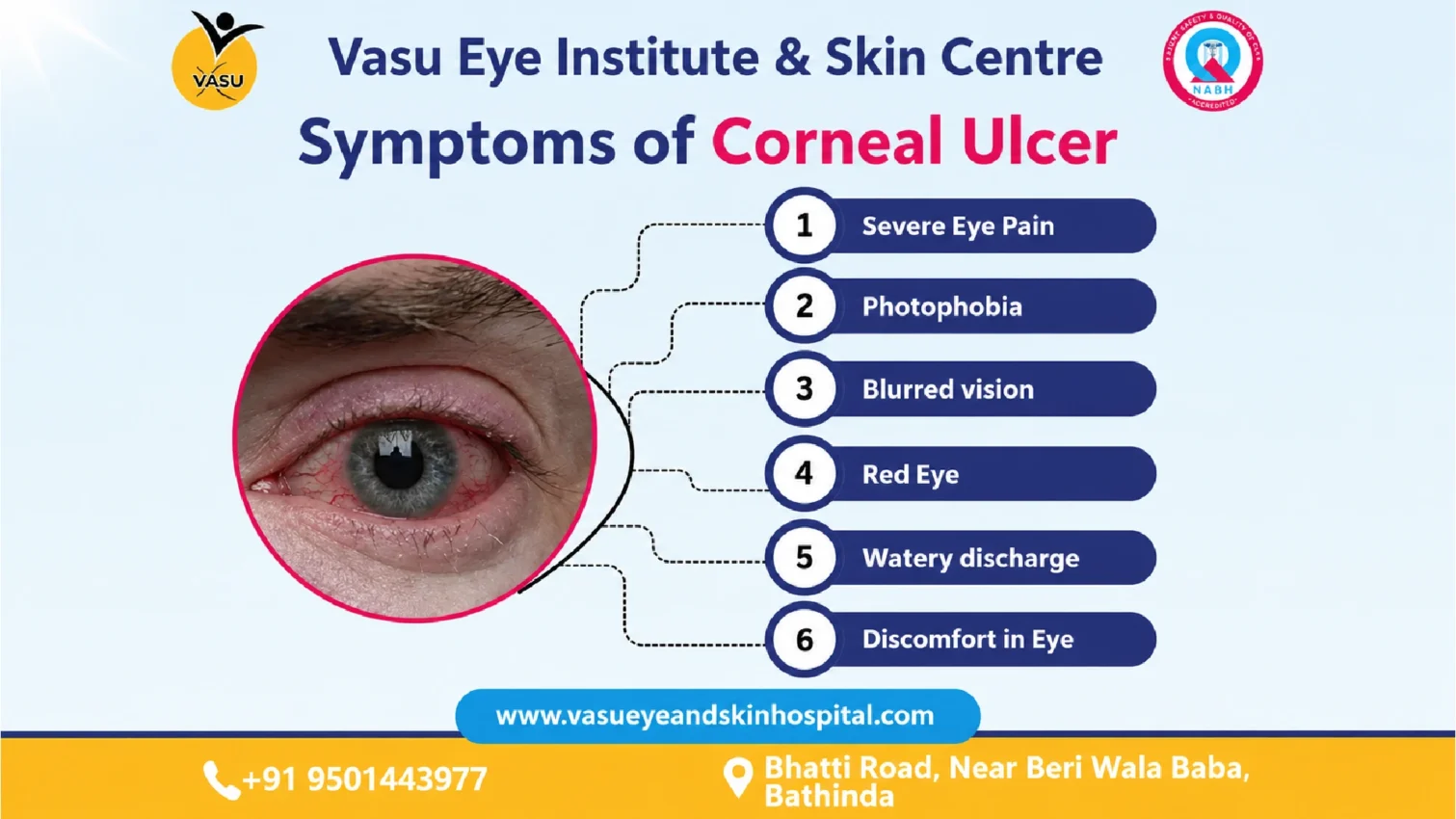
Common corneal disease symptoms include:
- Blurred vision.
- Eye redness.
- Excessive tearing.
- Eye pain or irritation.
- Light sensitivity.
- Foreign body sensation.
- Difficulty focusing clearly.
In some cases, corneal damage symptoms may include persistent redness, discomfort, excessive watering, pain, sensitivity to light, and noticeable changes in visual clarity. These symptoms should be evaluated promptly because untreated corneal damage may worsen over time.
Eye injuries may also result in blurred vision from corneal abrasion, particularly when the surface layer of the cornea becomes scratched. Even a minor abrasion can affect visual quality and increase the risk of infection if left untreated.
A detailed examination by a cornea specialist helps identify the cause of symptoms and determine the most suitable treatment approach.
Common Causes and Risk Factors for Corneal Disease
Several factors can affect corneal health and increase the risk of developing corneal disease.
Common causes include:
- Eye infections.
- Eye injuries and trauma.
- Improper contact lens use.
- Dry eye disease.
- Genetic corneal disorders.
- Autoimmune conditions.
- Previous eye surgery.
- Chronic inflammation.
Among the common causes of corneal edema are damage to corneal endothelial cells, post-surgical complications, eye infections, inflammation, and elevated eye pressure. Corneal edema results in swelling of the cornea, which may cause blurred vision, glare, and reduced visual clarity.
A scratched cornea can also cause corneal scratch blurry vision, making routine activities such as reading, driving, and screen use more difficult. Early medical evaluation helps reduce the risk of complications and promotes better healing.
Detailed diagnostic testing helps determine the exact cause of the condition and allows treatment to be tailored according to the patient’s needs.
Modern Treatment Options for Corneal Disease
Modern ophthalmology offers a variety of treatment options for corneal disease depending on its severity and underlying cause.
Treatment options may include:
- Lubricating eye drops.
- Anti-inflammatory medications.
- Antibiotic treatment.
- Antiviral therapy.
- Antifungal medications.
- Specialised contact lenses.
- Corneal cross-linking.
- Surgical intervention when necessary.
The primary goals of treatment are to manage symptoms, control disease progression, protect vision, and improve overall eye health.
Advanced diagnostic imaging and specialised corneal care services help ensure accurate diagnosis and personalised treatment planning for different corneal conditions.
Medical Treatments for Mild and Moderate Corneal Conditions
Many mild to moderate corneal disorders can be managed successfully without major surgery when diagnosed early.
Medical treatment options may include:
- Artificial tears and lubricating drops.
- Prescription anti-inflammatory medications.
- Antibiotics for bacterial infections.
- Antiviral medications for viral corneal infections.
- Bandage contact lenses.
- Ongoing monitoring and follow-up care.
A common concern in corneal care is does cornea heal itself after an injury. Minor superficial abrasions may heal naturally because the cornea has regenerative abilities. However, deeper injuries, infections, or persistent symptoms often require professional treatment to prevent complications.
Conditions associated with blurred vision from corneal abrasion should be monitored carefully to ensure proper healing and reduce the risk of long-term corneal damage.
Treatment plans are designed to support healing, improve comfort, and preserve long-term visual health.
How Corneal Transplant and New Technologies Improve Vision
Advanced corneal disease may require specialised surgical treatment when medical management alone is not sufficient.
Modern procedures may include:
- Corneal cross-linking.
- Therapeutic corneal surgery.
- Partial-thickness corneal transplantation.
- Full-thickness corneal transplantation.
- Advanced image-guided surgical techniques.
Corneal transplantation may be recommended when severe scarring, advanced swelling, or significant corneal damage interferes with vision. Modern technology has improved surgical precision, treatment planning, and long-term visual outcomes.
Advanced imaging systems allow surgeons to evaluate corneal structure in greater detail and customise treatment according to the specific condition affecting the eye.
Why Choose Vasu Eye Institute for Corneal Disease Treatment?
Effective corneal care requires accurate diagnosis, advanced technology, and specialised expertise.
Patients benefit from:
- Dedicated corneal care services.
- Consultation with an experienced cornea specialist.
- Advanced diagnostic imaging.
- Personalised treatment planning.
- Medical and surgical treatment options.
- Comprehensive follow-up care.
Whether managing mild cornea problems symptoms, treating corneal damage symptoms, identifying the causes of corneal edema, or addressing vision changes associated with corneal scratch blurry vision, treatment focuses on protecting vision and supporting long-term eye health.
At Vasu Eye Institute, every patient receives individualised care based on their corneal condition, visual needs, and overall eye health.
FAQs
Early corneal disease symptoms may include blurred vision, redness, tearing, irritation, light sensitivity, and a foreign body sensation. Prompt evaluation can help identify the cause and prevent the condition from worsening.
Yes. Untreated corneal disease can lead to scarring, progressive corneal damage, and permanent vision impairment. Early diagnosis and timely treatment help reduce complications and improve long-term visual outcomes.
Corneal disease is diagnosed through a comprehensive eye examination, slit-lamp evaluation, corneal imaging, corneal thickness measurements, and specialised tests that assess the health and structure of the cornea.
Treatment options include lubricating drops, medications, specialised contact lenses, corneal cross-linking, and surgical procedures such as corneal transplantation. The appropriate treatment depends on the severity and cause of the condition.
Individuals with eye injuries, infections, dry eye disease, autoimmune disorders, contact lens misuse, genetic corneal conditions, or previous eye surgeries may have a higher risk of developing corneal disease.
While not all corneal diseases can be prevented, maintaining proper eye hygiene, using contact lenses safely, protecting the eyes from injury, and attending regular eye examinations can help reduce the risk.