
Cataract vs Glaucoma: A Complete Guide to Symptoms, Diagnosis, and Treatment

- What Are Cataracts and Glaucoma?
- What Are the Symptoms of Cataracts and Glaucoma?
- How Do Cataracts and Glaucoma Differ?
- How Are Cataracts and Glaucoma Diagnosed?
- Treatment Options for Cataracts and Glaucoma
- Causes and Risk Factors
- When Should You See an Eye Specialist?
- Why Choose Vasu Eye & Skin Hospital, Bathinda?
- FAQs
Cataract and glaucoma are two of the most common eye conditions that affect vision, especially as people age. While both can lead to vision problems, they are very different conditions in how they develop, what part of the eye they affect, and how they are managed. In India, cataract is commonly known as Safed Motia (सफ़ेद मोतिया) and glaucoma is widely referred to as Kala Motia (काला मोतिया)—terms that many patients and families are already familiar with.
Patients searching online often want a clear explanation of the difference between cataract and glaucoma, along with symptoms, diagnosis, and treatment options. This guide explains both conditions in a simple, patient-friendly way and highlights how they contribute to common causes of vision loss if not managed on time.
What Are Cataracts and Glaucoma?
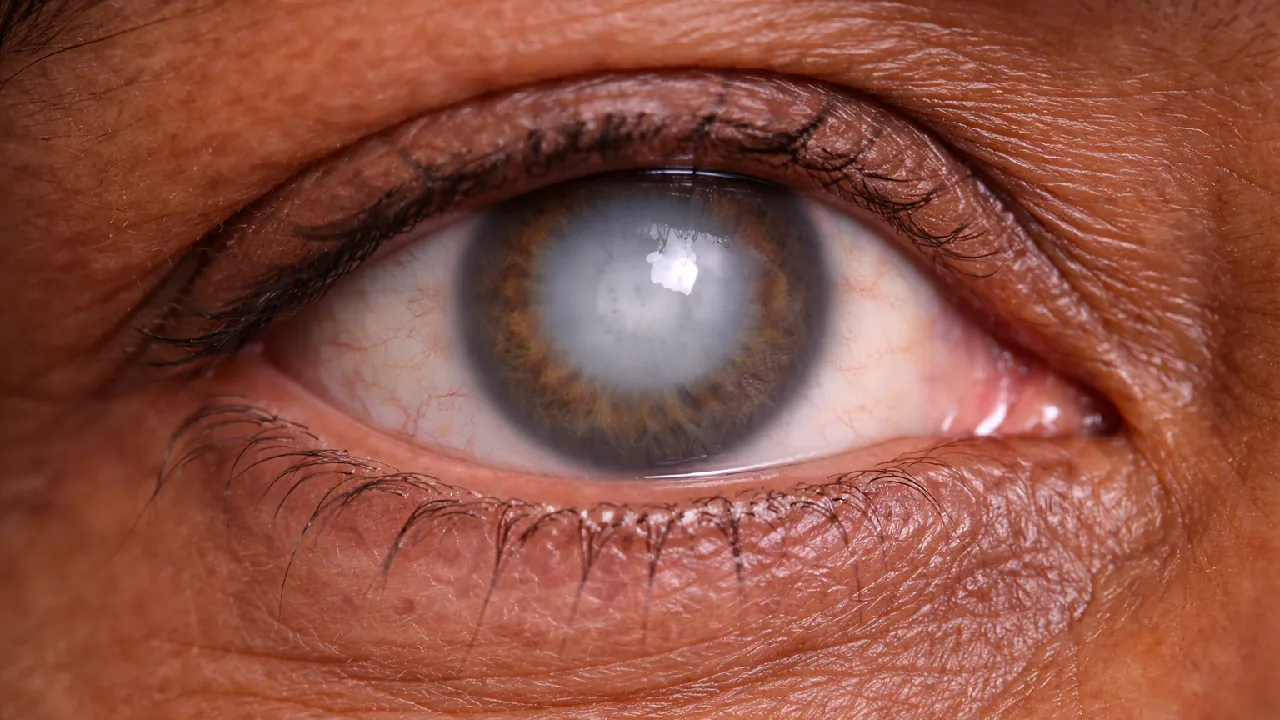
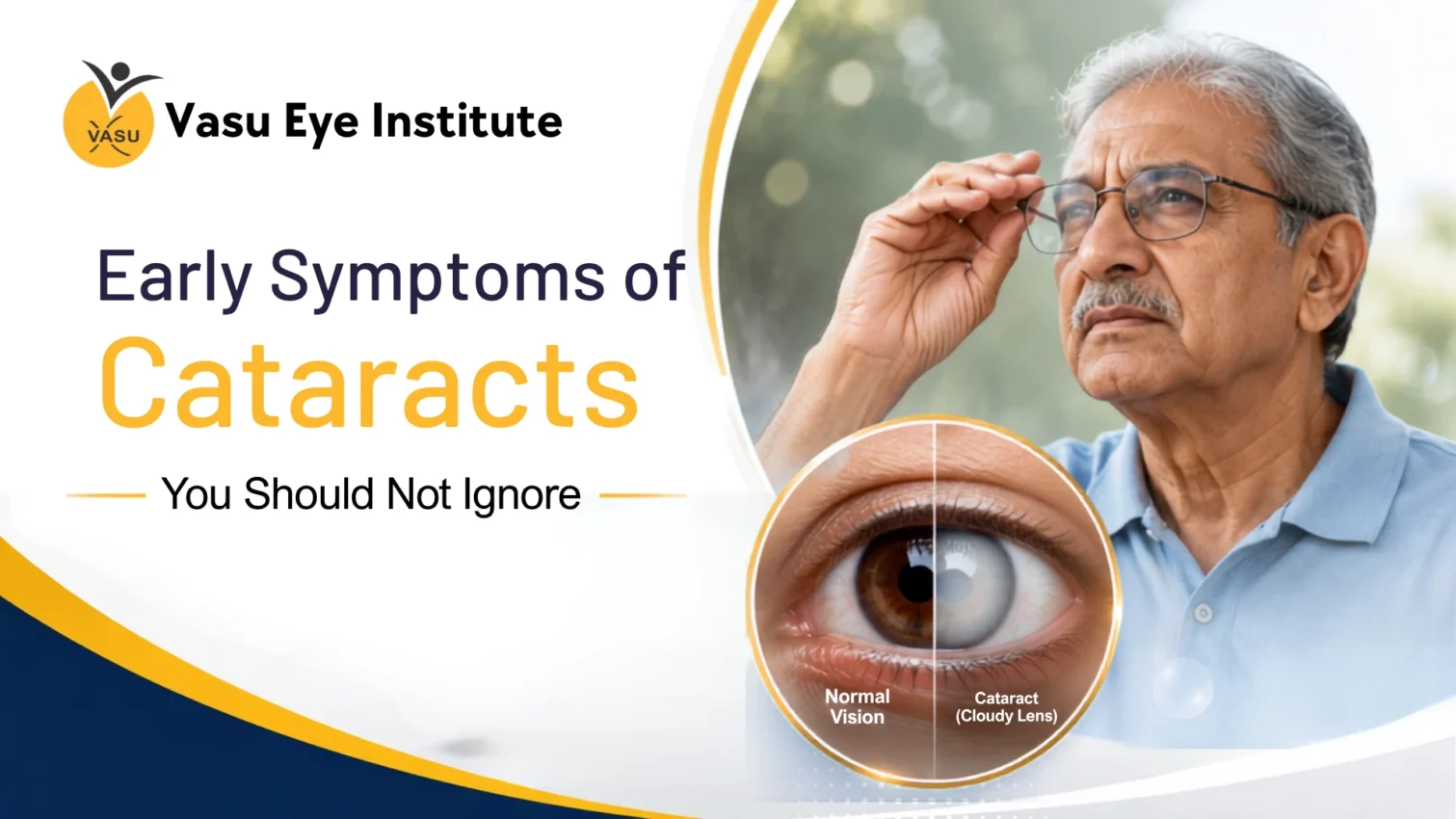
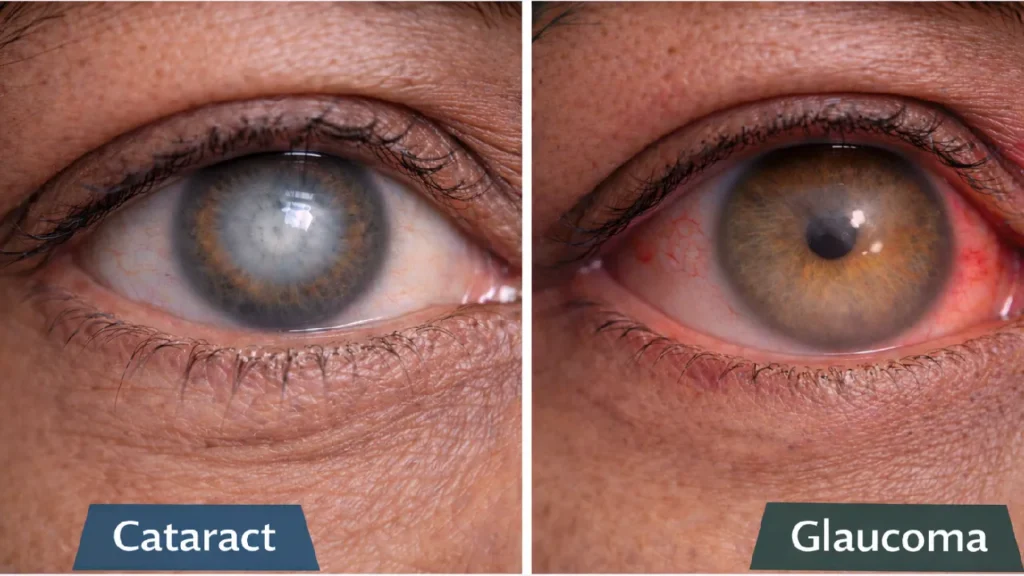
A cataract occurs when the natural lens of the eye becomes cloudy, causing blurred or hazy vision. This clouding of the lens is the reason cataract is commonly called Safed Motia (सफ़ेद मोतिया). Cataracts usually develop slowly and are one of the leading causes of reversible vision loss.
Vision affected by cataract can often be restored with a standard cataract treatment procedure, where the cloudy lens is removed and replaced with an artificial intraocular lens. This cataract treatment procedure is well established, safe, and commonly performed in modern eye hospitals.
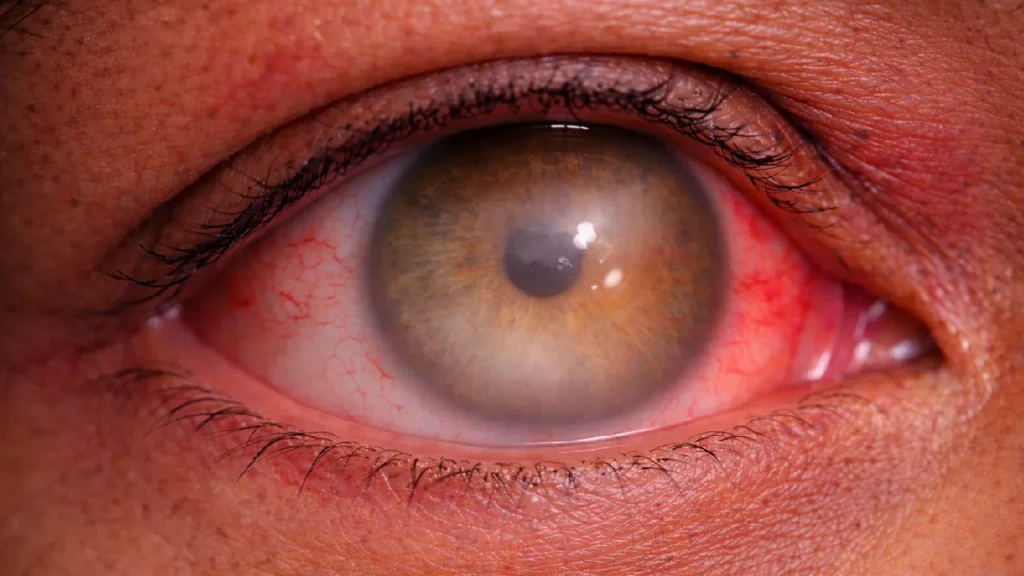
Glaucoma, on the other hand, is a glaucoma disease of eye in which increased pressure inside the eye damages the optic nerve. In Hindi, glaucoma is referred to as Kala Motia (काला मोतिया). Unlike cataract, vision loss caused by glaucoma is usually irreversible if not detected and controlled early. Because early glaucoma may not show obvious symptoms, it is a significant contributor to long-term causes of vision loss.
What Are the Symptoms of Cataracts and Glaucoma?
Understanding symptoms is the fastest way to recognise the difference between cataract and glaucoma (Safed Motia vs Kala Motia).
Common Cataract (Safed Motia) Symptoms
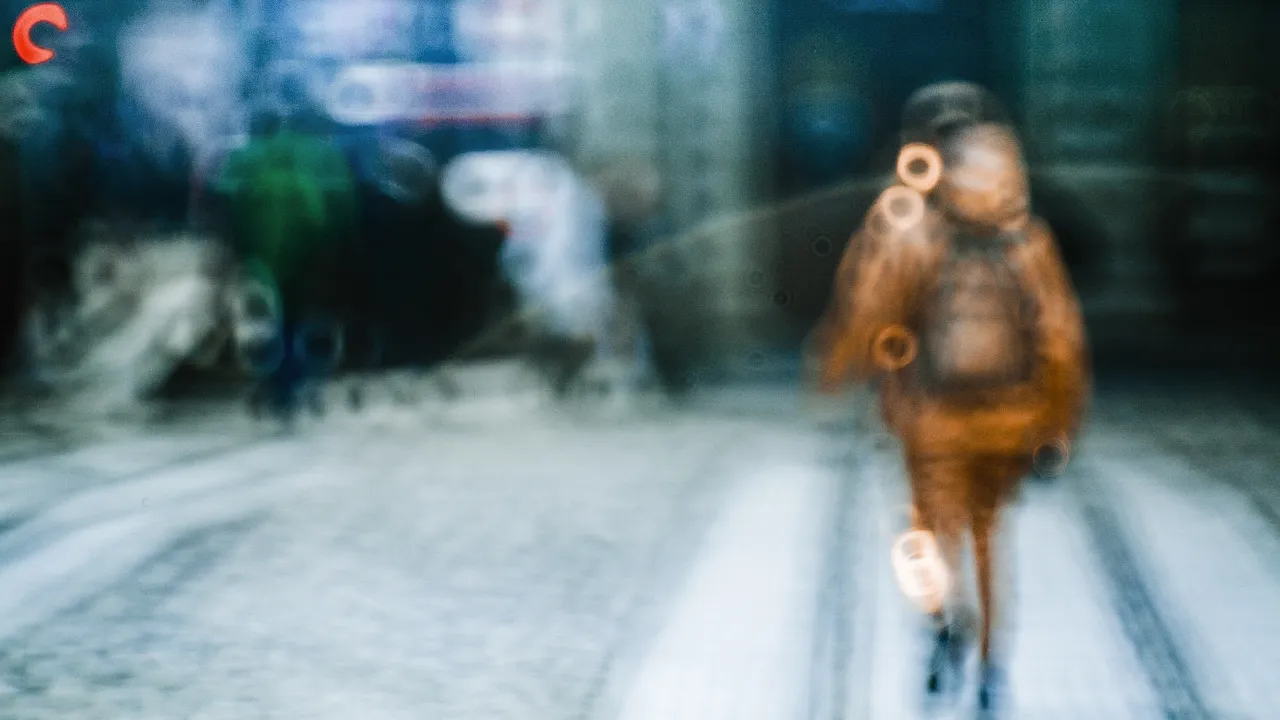
- Blurred or cloudy vision
- Difficulty seeing at night
- Sensitivity to light and glare
- Colours appearing faded or yellowish
These symptoms usually worsen gradually. Many patients notice that changing spectacles does not fully improve vision, which is often a sign that cataract treatment may be required.
Common Glaucoma (Kala Motia) Symptoms

- Gradual loss of side (peripheral) vision
- Eye pain or headache in some types
- Sudden vision changes in acute cases
Glaucoma can progress silently, which is why early glaucoma treatment and routine eye check-ups are extremely important.
How Do Cataracts and Glaucoma Differ?
Here is a simple way to understand the difference between cataract and glaucoma:
| Cataract (Safed Motia) | Glaucoma (Kala Motia) |
|---|---|
| Affects the eye’s natural lens | Affects the optic nerve |
| Vision loss is usually reversible | Vision loss can be permanent |
| Progresses slowly with lens clouding | Can progress silently |
| Treated mainly with surgery | Managed with long-term pressure control |
Cataract causes blurred vision due to lens opacity, while glaucoma causes vision loss because of optic nerve damage. This is why delayed glaucoma treatment can result in permanent vision loss even when early symptoms are mild or absent.
How Are Cataracts and Glaucoma Diagnosed?
Both conditions are diagnosed through a complete eye examination.
For cataract, doctors usually assess:
- Lens clarity
- Visual acuity
- Glare sensitivity
For glaucoma, evaluation typically includes:
- Measuring eye pressure
- Examining the optic nerve
- Assessing side (peripheral) vision
Early diagnosis is critical because cataract is a reversible cause among the causes of vision loss, while glaucoma-related vision loss can only be prevented—not reversed—if glaucoma treatment begins early.
Treatment Options for Cataracts and Glaucoma
Cataract Treatment
Cataract treatment is primarily surgical. The most common cataract treatment procedure involves removing the cloudy lens and implanting an artificial lens. After cataract surgery, most patients experience significant improvement in clarity, contrast, and daily visual function. For Safed Motia, timely cataract treatment can greatly improve quality of life.
Glaucoma Treatment
Glaucoma treatment focuses on controlling eye pressure and protecting the optic nerve. Management is individualised and may include:
- Medicated eye drops
- Regular monitoring of eye pressure and optic nerve health
- Additional interventions if required, based on specialist evaluation
It is important to understand that glaucoma does not get “removed” like cataract. For Kala Motia, ongoing glaucoma treatment and long-term follow-up are essential to preserve remaining vision.
Causes and Risk Factors
Several factors increase the risk of cataract and glaucoma:
- Increasing age
- Diabetes
- Family history of eye disease
- Prolonged steroid use
- Eye injuries
- High intraocular pressure
These factors are among the most common causes of vision loss worldwide. Cataract is a reversible cause with proper cataract treatment, while glaucoma remains a serious glaucoma disease of the eye requiring lifelong monitoring and consistent glaucoma treatment.
When Should You See an Eye Specialist?
You should consult an eye specialist if you experience:
- Persistent blurred vision
- Difficulty seeing at night
- Sudden vision changes
- Eye pain or pressure
- A family history of glaucoma
Early evaluation helps determine the right cataract treatment plan or glaucoma treatment plan and prevents avoidable causes of vision loss.
Why Choose Vasu Eye & Skin Hospital, Bathinda?
Patients looking for the best eye doctor for cataract and glaucoma usually seek accurate diagnosis, modern diagnostic facilities, and comprehensive long-term care. For individuals evaluating options for cataract and glaucoma assessment, vasu hospital bathinda is known for structured eye examinations and personalised treatment planning.
At vasu hospital bathinda, patients receive counselling for Safed Motia (cataract) and Kala Motia (glaucoma), along with guidance on the appropriate cataract treatment procedure and long-term glaucoma treatment follow-ups as per individual eye health needs.
Cataract and glaucoma are common eye conditions, but they are not the same. Cataract (Safed Motia) affects the eye’s lens and is usually reversible with a cataract treatment procedure. Glaucoma (Kala Motia) is a glaucoma disease of the eye that damages the optic nerve and can cause irreversible vision loss without timely glaucoma treatment.
Understanding the difference between cataract and glaucoma, recognising symptoms early, and seeking proper diagnosis are key steps in reducing avoidable causes of vision loss and protecting long-term vision.
FAQs
The key difference between cataract and glaucoma is that cataract clouds the lens and is usually reversible with cataract treatment, while glaucoma damages the optic nerve and can cause permanent vision loss without glaucoma treatment.
Yes. A person can have both Safed Motia and Kala Motia together and may require combined cataract treatment and glaucoma treatment planning.
Glaucoma can cause permanent vision loss because it is a glaucoma disease of the eye that damages the optic nerve.
Yes. Cataract surgery can be safely performed in glaucoma patients with proper evaluation and follow-up.
No. Glaucoma cannot be cured completely, but glaucoma treatment can control eye pressure and slow progression.
Glaucoma is often more dangerous because its vision loss is irreversible, while cataract vision loss is usually reversible with cataract treatment.
Patients should look for experience, diagnostics, and long-term care. Many patients consider vasu hospital bathinda when searching for the best eye doctor for cataract and glaucoma and comprehensive eye care services.