
Is LASIK Safe for Long-Term Vision? Myths, Facts, and Latest Advancements in Bathinda

- What Is LASIK & How Does It Work?
- Is LASIK Safe for Long-Term Vision?
- Common LASIK Myths vs Facts (Most Searched Queries)
- What Happens on the First Day After LASIK Surgery?
- Long-Term Effects of LASIK Surgery: What You Should Know
- Common Long-Term Effects (Usually Mild and Manageable)
- Rare but Serious Long-Term Complications
- Before and After LASIK Eye Surgery: What Changes?
- Latest Advancements in LASIK Technology
- Who Is Eligible for LASIK Eye Surgery?
- Life After LASIK: Long-Term Expectations
- FAQs
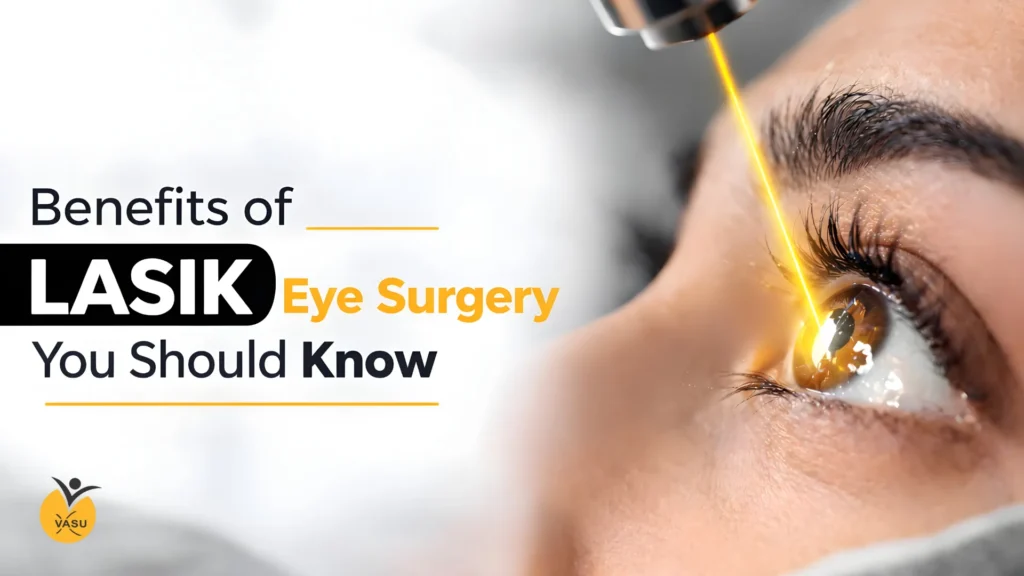
LASIK eye surgery has become one of the most commonly chosen vision correction procedures worldwide. Yet, many people searching online still ask the same question — is LASIK safe for long-term vision?
Concerns around safety, recovery, cost, and long-term side effects often stop patients from taking the next step, even when they are suitable candidates.
This blog explains laser eye surgery safety in simple terms, clears common myths, discusses the long term effects of LASIK, and helps you understand what to expect before and after surgery, so you can decide with confidence.
What Is LASIK & How Does It Work?
LASIK (Laser-Assisted In Situ Keratomileusis) is an advanced laser vision correction procedure designed to treat common refractive errors, including:
- Near-sightedness (Myopia) – difficulty seeing distant objects clearly
- Far-sightedness (Hyperopia) – difficulty focusing on nearby objects
- Astigmatism – blurred or distorted vision due to an irregularly shaped cornea
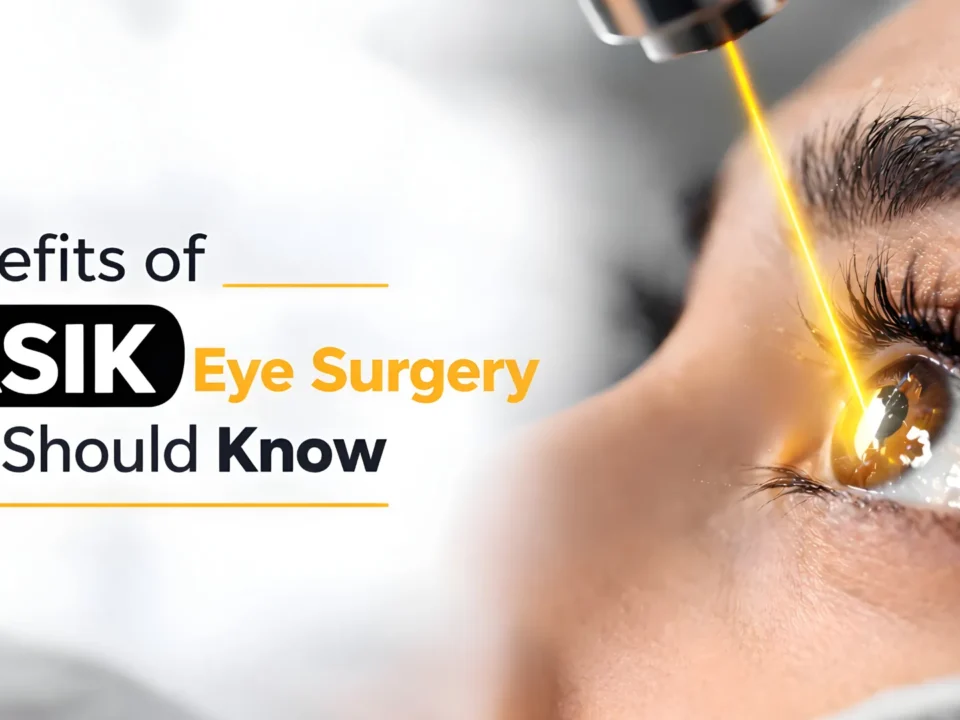
LASIK works by precisely reshaping the cornea the clear front surface of the eye so that light entering the eye focuses correctly on the retina, resulting in clearer vision.
How the LASIK Procedure Is Performed
During a modern LASIK procedure:
- A precise corneal layer is prepared using advanced laser technology
- An excimer laser gently reshapes the cornea based on your eye’s unique measurements
- The corneal layer naturally settles back into place without stitches
The entire procedure usually takes 10–15 minutes for both eyes and is performed using numbing (anaesthetic) eye drops, making it virtually painless.
Most patients notice a significant improvement in vision within 24 hours, and many are able to return to normal activities very quickly.
Is LASIK Safe for Long-Term Vision?
Yes. LASIK is safe for long-term vision when performed on the right candidate after proper evaluation.
Multiple clinical studies show that vision after LASIK remains stable for many years, with a high satisfaction rate.
When people report vision changes years later, these are usually due to:
- Natural ageing of the eyes
- Presbyopia (age-related reading difficulty)
- Other unrelated eye conditions
These changes are not caused by LASIK itself. Proper screening is the key factor behind laser eye surgery safety.
Common LASIK Myths vs Facts
Myth: LASIK surgery is painful
Myth: LASIK only corrects nearsightedness (myopia)
Fact: LASIK effectively corrects common refractive errors including nearsightedness, farsightedness (hyperopia), and astigmatism by reshaping the cornea to focus light correctly on the retina.
Myth: LASIK results are not long-lasting or permanent
Fact: In most cases, LASIK provides long-lasting vision improvement. Although it doesn’t prevent age-related changes (like presbyopia or cataracts), the corneal reshaping achieved by LASIK usually remains stable for many years.
Myth: LASIK is dangerous or unsafe
Fact: LASIK is widely regarded as a safe and well-studied procedure with a long global clinical history. Serious complications are rare when the surgery is performed by trained specialists after proper screening.
Myth: Only young people can get LASIK
Fact: While LASIK is often recommended for adults with stable vision (usually 18+), many older individuals may also benefit if their eye health and prescription are suitable.
Myth: LASIK recovery is slow and difficult
What Happens on the First Day After LASIK Surgery?
The first day after LASIK is usually comfortable, but rest is essential.
Common experiences include:
- Mild watering or burning
- Temporary blurred vision
- Light sensitivity
Doctors prescribe after laser eye surgery eye drops to prevent infection, reduce dryness, and support healing. Most patients notice clear vision within 24 hours.
LASIK Laser Eye Surgery Recovery Time
One of the biggest advantages of LASIK is its quick recovery.
Typical LASIK laser eye surgery recovery time:
- Basic vision clarity: 24–48 hours
- Return to work: 2–3 days
- Complete healing: a few weeks
Avoid rubbing your eyes, swimming, or excessive screen use during early recovery to ensure smooth healing.
Long-Term Effects of LASIK Surgery: What You Should Know
LASIK permanently reshapes the cornea to correct vision, and for most people, the long-term results are highly positive. The majority of patients enjoy many years of clear, stable vision and freedom from glasses or contact lenses.
However, like any medical procedure, LASIK has both long-term benefits and potential long-term considerations. Understanding these helps patients make informed, realistic decisions.
Common Long-Term Effects (Usually Mild and Manageable)
1. Long-lasting Clear Vision
Most patients maintain significantly improved vision for many years after LASIK. The corneal correction itself is permanent.
2. Dry Eyes
Some patients may experience ongoing dryness, especially in the first months. In a small number of cases, mild dryness can persist and is usually managed effectively with lubricating eye drops and proper eye care.
3. Visual Disturbances in Low Light
Mild glare, halos, or starbursts around lights—particularly at night—can remain in some individuals. These symptoms often reduce over time as the eyes adapt.
4. Vision Regression Over Years
In some cases, vision may slowly shift over many years. This can be due to natural eye changes and may require glasses, reading glasses, or enhancement procedures.
5. Presbyopia (Age-Related Near Vision Changes)
In some cases, vision may slowly shift over many years. This can be due to natural eye changes and may require glasses, reading glasses, or enhancement procedures.
Rare but Serious Long-Term Complications
Serious long-term complications are uncommon, especially when proper screening is done before surgery, but they can include:
Corneal Ectasia
A rare condition where the cornea becomes weakened and bulges forward, potentially requiring specialized treatment.
Corneal Healing Issues
Very rarely, healing problems can affect vision quality.
Reduction in Best-Corrected Vision
Extremely rare cases may experience a decrease in maximum achievable vision.
These risks are significantly minimized with advanced screening, modern laser technology, and experienced surgical care.
Before and After LASIK Eye Surgery: What Changes?
Understanding before and after LASIK eye surgery helps set realistic expectations.
Before LASIK:
- Dependence on glasses or contact lenses
- Difficulty during sports or travel
- Ongoing cost of lenses and maintenance
After LASIK:
- Clear unaided vision
- Freedom from glasses in daily activities
- Improved lifestyle convenience
Results vary based on eye condition, but most patients achieve excellent visual outcomes.
Latest Advancements in LASIK Technology
Over the past decade, LASIK surgery has evolved significantly. What was once a standard refractive correction procedure has transformed into a highly precise, computer-guided, patient-centric vision solution, thanks to breakthroughs in laser mapping, digital planning, and tissue-friendly techniques.
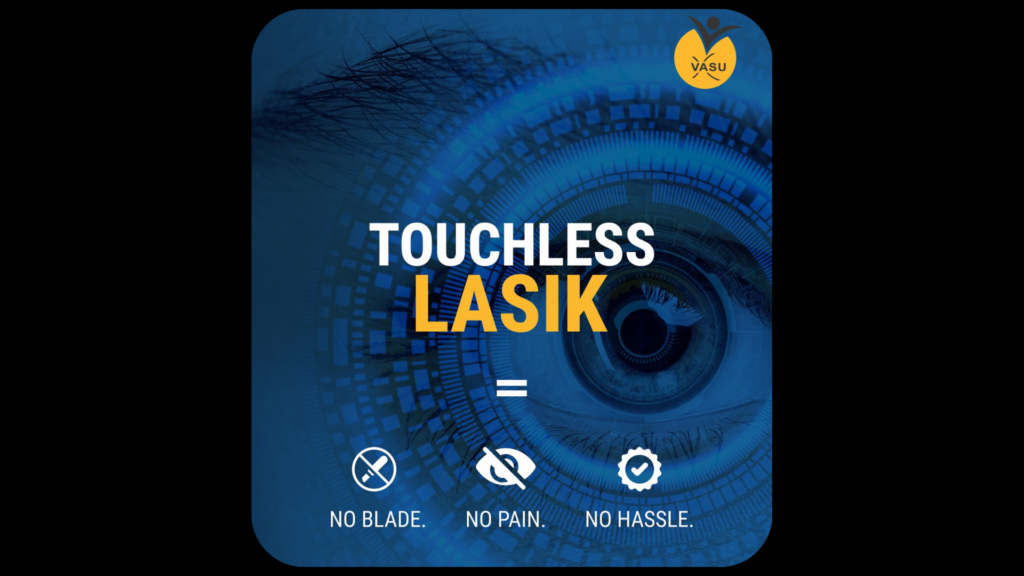
At Vasu Eye Institute, Bathinda, we are proud to bring one of the most advanced forms of this evolution to patients in the Malwa region: Touchless LASIK — a procedure that combines the latest innovations in laser technology with a focus on safety, speed, and personalised outcomes.
1. From Blades to Bladeless — A Safer, Smarter LASIK
Earlier generations of LASIK used mechanical instruments to create a corneal flap. While effective, these methods involved more manual steps and variable pressure on the eye.
Today’s Touchless LASIK is fully bladeless and computer-coordinated:
- No mechanical blades
- No direct contact with the eye surface
- Precision laser pulses guided by 3D corneal maps
This enhances safety, minimizes risk, and makes the entire procedure more predictable and patient-friendly.
2. Wavefront-Guided & Topography-Assisted Treatments
Modern LASIK integrates advanced imaging such as:
- Wavefront technology — measures subtle imperfections
- Corneal topography — maps the curvature of the cornea
- Customised ablation profiles — tailored to each individual eye
These ensure that the laser reshaping is not “one size fits all” but uniquely suited to each patient’s optical structure — improving quality of vision, especially in low-light conditions.
3. Real-Time Eye Tracking & Digital Precision
Latest systems used in Touchless LASIK continuously monitor eye position during the laser application, compensating for even the tiniest movements.
This means:
- Higher accuracy
- Less tissue removal
- More predictable visual outcomes
Such precision helps reduce side effects and improves patient satisfaction.
4. Faster Recovery, Enhanced Comfort
Advancements in laser platforms and treatment software have made modern LASIK procedures quicker often just minutes per eye with remarkable visual improvement reported as early as the next day.
Because Touchless LASIK uses numbing drops only, most patients describe the experience as comfortable and non-invasive, with minimal postoperative discomfort.
5. Artificial Intelligence & Customised Planning
One of the most exciting frontiers in refractive surgery is the use of AI-enabled planning. These systems analyse corneal shape, thickness, and visual aberrations to customise the laser pattern for each eye.
Touchless LASIK at Vasu Eye Institute utilises advanced laser algorithms and digital planning tools to ensure:
- Highly precise correction
- Faster healing
- Reduced variability in outcomes
Who Is Eligible for LASIK Eye Surgery?
Not everyone qualifies for LASIK. Doctors evaluate:
- Stable spectacle power
- Adequate corneal thickness
- Healthy eye surface
- Age above 18 years
A comprehensive eye examination determines who is eligible for LASIK eye surgery, ensuring the procedure is both safe and effective.
LASIK Eye Surgery Cost in Punjab: What to Know
One of the most searched questions is about LASIK eye surgery cost in Punjab.
The cost can vary depending on:
- Technology used
- Surgeon’s expertise
- Pre- and post-operative care
While LASIK may seem expensive initially, many patients find it cost-effective over time when compared to years of spending on glasses and contact lenses.
For more details about Lasik Surgery Cost in Punjab read this blog
Life After LASIK: Long-Term Expectations
Life after LASIK is usually smooth and convenient.
Most patients enjoy:
- Stable vision
- Reduced eye strain
- Greater confidence in daily activities
Following post-surgery care instructions and attending follow-ups ensures lasting results.
So, is LASIK safe for long-term vision?
Yes — when done after proper evaluation using advanced technology, LASIK is a safe, reliable, and long-lasting solution for vision correction.
Understanding the facts, recovery process, eligibility, and long-term outcomes helps you make an informed decision without fear or misinformation.
Why This Matters for You
When considering a technology like Touchless LASIK, it’s not about “buzzwords” — it’s about better accuracy, more comfort, and better visual quality. The combination of bladeless lasers, topography-guided planning, real-time tracking, and AI-supported precision represents the latest advancements in refractive surgery and the direction modern eye care is headed.
This is why more patients across Bathinda, Punjab, and surrounding districts are choosing Touchless LASIK at Vasu Eye Institute not just for clearer vision, but for a smarter, safer, and more personalised vision correction experience.
FAQs
LASIK is not painful. Anaesthetic eye drops are used during the procedure. Mild discomfort or watering may occur for a few hours after surgery, but it settles quickly.
Yes. Studies show that LASIK results remain stable even after 10 years. Vision changes later in life are usually due to ageing, not LASIK.
Yes. LASIK is safe for professionals who use screens regularly, provided dry eye and eye health are properly evaluated before surgery.
LASIK is usually recommended after 18 years of age, once spectacle power has stabilised. Eligibility depends more on eye health than age alone.
For many patients, LASIK offers long-term convenience and freedom from glasses, making it a worthwhile investment in vision and lifestyle.