
How Glaucoma Eye Surgery Helps Prevent Vision Loss

- What Is Glaucoma Eye Surgery?
- Purpose of Glaucoma Eye Surgery
- Types of Glaucoma Eye Surgery
- How Glaucoma Eye Surgery Helps Prevent Vision Loss
- Who Needs Glaucoma Eye Surgery?
- Glaucoma Surgery Pros and Cons
- Glaucoma Eye Surgery Risks and Side Effects
- How Long Does Glaucoma Eye Surgery Take?
- Glaucoma Eye Surgery Recovery
- Glaucoma Eye Surgery Cost
- Where to Find the Best Glaucoma Eye Surgery Near You
- Conclusion
- FAQs
Glaucoma is one of the leading causes of irreversible blindness worldwide. What makes it especially dangerous is that vision loss often happens silently, without early warning signs. By the time symptoms are noticed, significant optic nerve damage may already have occurred.
This is why timely treatment and in selected cases, glaucoma eye surgery plays a critical role in preserving vision.
For patients researching how glaucoma eye surgery helps prevent vision loss, understanding the purpose of surgery, recovery expectations, risks, and real outcomes is essential. This blog explains glaucoma surgery in a clear, patient-focused manner, based on the glaucoma care approach followed at Vasu Eye Institute & Skin Centre.
What Is Glaucoma Eye Surgery?
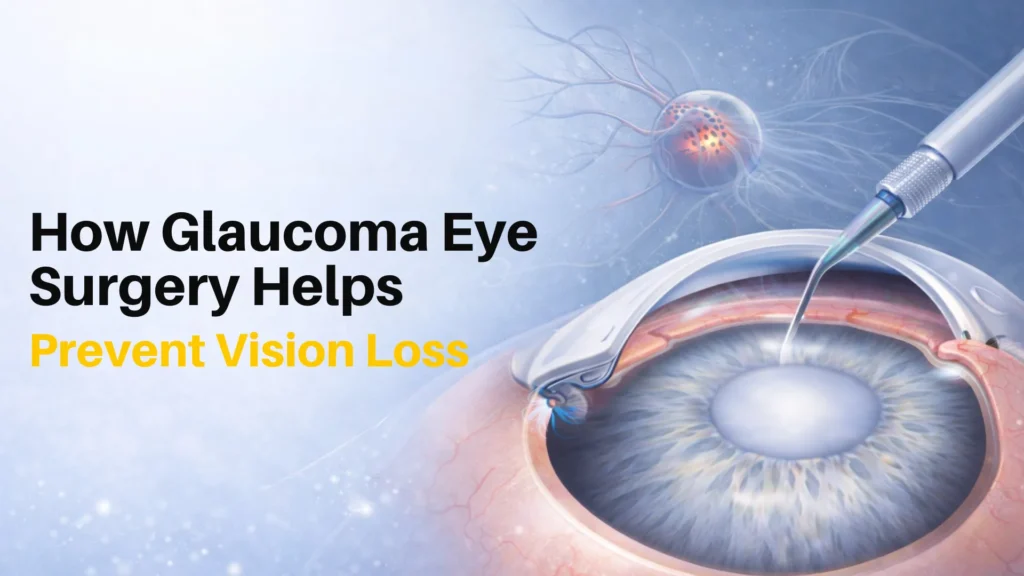
Glaucoma eye surgery refers to surgical procedures designed to lower intraocular pressure when eye drops or laser treatments fail to control glaucoma effectively. Since high eye pressure is the main cause of optic nerve damage, surgery focuses on improving fluid drainage or reducing fluid production inside the eye.
It is important to understand that glaucoma surgery does not cure glaucoma or restore lost vision. Instead, it helps slow disease progression and protect remaining vision, which is why timely surgical intervention can make a significant difference.
Purpose of Glaucoma Eye Surgery
The purpose of glaucoma eye surgery is pressure control. When pressure remains high despite treatment, the risk of irreversible vision loss increases.
Glaucoma surgery helps by:
- Reducing intraocular pressure
- Preventing further optic nerve damage
- Stabilising vision over the long term
Discussing the glaucoma surgery pros and cons with a specialist helps patients decide whether surgery is the right option for their condition.
Types of Glaucoma Eye Surgery
The choice of glaucoma eye surgery depends on the type of glaucoma, severity of eye pressure damage, and how well the condition responds to medications. At Vasu Eye Institute & Skin Centre, glaucoma treatment is planned after a detailed evaluation by a glaucoma specialist, ensuring safe and effective pressure control.
Laser Glaucoma Surgery (Nd:YAG Laser)
Laser glaucoma surgery is commonly advised when eye drops are not enough to control high eye pressure. At Vasu Eye Institute, Nd:YAG laser procedures are used to improve fluid outflow inside the eye, especially in certain types of glaucoma.
This laser eye surgery for glaucoma is performed as an outpatient procedure, requires minimal recovery time, and helps reduce the risk of further optic nerve damage.
Trabeculectomy Surgery
Trabeculectomy is recommended in moderate to advanced glaucoma cases where medications and laser glaucoma treatment are not sufficient.
During this glaucoma eye surgery, a new drainage pathway is created to lower eye pressure effectively. Trabeculectomy remains one of the most reliable surgical options to protect vision in progressive glaucoma when pressure remains uncontrolled.
Glaucoma Drainage Implants
In selected advanced or complex glaucoma cases, glaucoma drainage implants may be advised. These implants help redirect excess fluid from the eye, reducing pressure and slowing further vision damage.
This option is usually considered when previous treatments have not provided adequate long-term pressure control.
How Glaucoma Eye Surgery Helps Prevent Vision Loss
Glaucoma eye surgery plays a crucial role in long-term disease management. By lowering eye pressure, surgery helps slow optic nerve damage and prevents further visual field loss.
Doctors may recommend surgery when:
- Eye pressure remains uncontrolled
- Vision continues to deteriorate
- Medication side effects limit long-term use
Understanding real-world glaucoma surgery experience helps patients feel more confident about taking this step to protect their eyesight.
Who Needs Glaucoma Eye Surgery?
Glaucoma eye surgery may be advised if:
- Eye drops are no longer effective
- Laser treatment has limited results
- Glaucoma is progressing rapidly
- Optic nerve damage is increasing
A detailed eye examination helps determine whether surgery is necessary and which approach is most suitable.
Glaucoma Surgery Pros and Cons
Pros
- Long-term eye pressure control
- Reduced dependence on daily eye drops
- Slower progression of glaucoma
- Protection of remaining vision
Cons
- Surgery does not restore lost vision
- Regular follow-up is required
- Healing takes time
Understanding the glaucoma surgery pros and cons ensures realistic expectations before proceeding.
Glaucoma Eye Surgery Risks and Side Effects
Like any procedure, glaucoma surgery involves certain glaucoma eye surgery risks. These may include:
- Temporary eye redness or irritation
- Pressure fluctuations
- Mild inflammation
Possible glaucoma eye surgery side effects are usually manageable with proper medical supervision. Serious complications are uncommon when surgery is performed by an experienced specialist and followed by regular monitoring.
How Long Does Glaucoma Eye Surgery Take?
Patients often ask, how long does glaucoma eye surgery take?
The procedure duration depends on the type of surgery. Most glaucoma surgeries are completed within a planned surgical session, followed by observation and scheduled follow-ups.
Glaucoma Eye Surgery Recovery
Glaucoma eye surgery recovery varies by procedure type:
- Laser procedures typically involve quicker recovery
- Surgical procedures may require longer healing and close follow-up
Doctors provide detailed instructions regarding medications, activity restrictions, and follow-up visits to support safe recovery.
Glaucoma Eye Surgery Cost
Glaucoma eye surgery cost depends on:
- Type of surgery required
- Disease severity
- Diagnostic tests and follow-up care
A personalised cost estimate is usually provided after a comprehensive evaluation by a glaucoma specialist.
Where to Find the Best Glaucoma Eye Surgery Near You
If you are searching for the best glaucoma eye surgery near you, consider:
- Availability of a dedicated glaucoma specialist
- Advanced diagnostic facilities
- Experience with both medical and surgical glaucoma care
- Structured post-surgery follow-up
Choosing the right centre plays a major role in long-term vision preservation.
Conclusion
Glaucoma is a lifelong condition, but vision loss can often be prevented with timely intervention. Glaucoma eye surgery becomes essential when other treatments are no longer effective. By lowering eye pressure, surgery helps slow disease progression and protect remaining vision.
Understanding glaucoma eye surgery cost, risks, recovery, and real glaucoma surgery experience allows patients to make informed decisions about their eye health.
FAQs
No. Glaucoma eye surgery helps prevent further vision loss but cannot restore vision already lost.
Yes. Contact lenses can trap smoke and dust (धुआं / ਧੂੰਆਂ), causing dryness or redness. It’s better to wear spectacles (ऐनक / ਐਨਕ) instead during the festival.
Temporary pressure changes, inflammation, or mild irritation may occur but are usually manageable.
Recovery depends on the procedure. Laser surgeries recover faster, while surgical procedures need longer monitoring.
No. Glaucoma surgery controls eye pressure but does not cure glaucoma. Lifelong follow-up is required.