

Implantable collamer lens surgery is an advanced vision correction procedure designed for people with moderate to high refractive errors who may not be suitable candidates for LASIK. The procedure involves placing a thin biocompatible lens inside the eye to improve vision without removing the natural corneal tissue.
ICL eye surgery offers a long-term vision correction option for individuals looking to reduce dependence on glasses or contact lenses. Advanced diagnostic evaluation, personalised treatment planning, and experienced eye specialists help provide safer and more precise vision correction outcomes at Vasu Eye Institute.
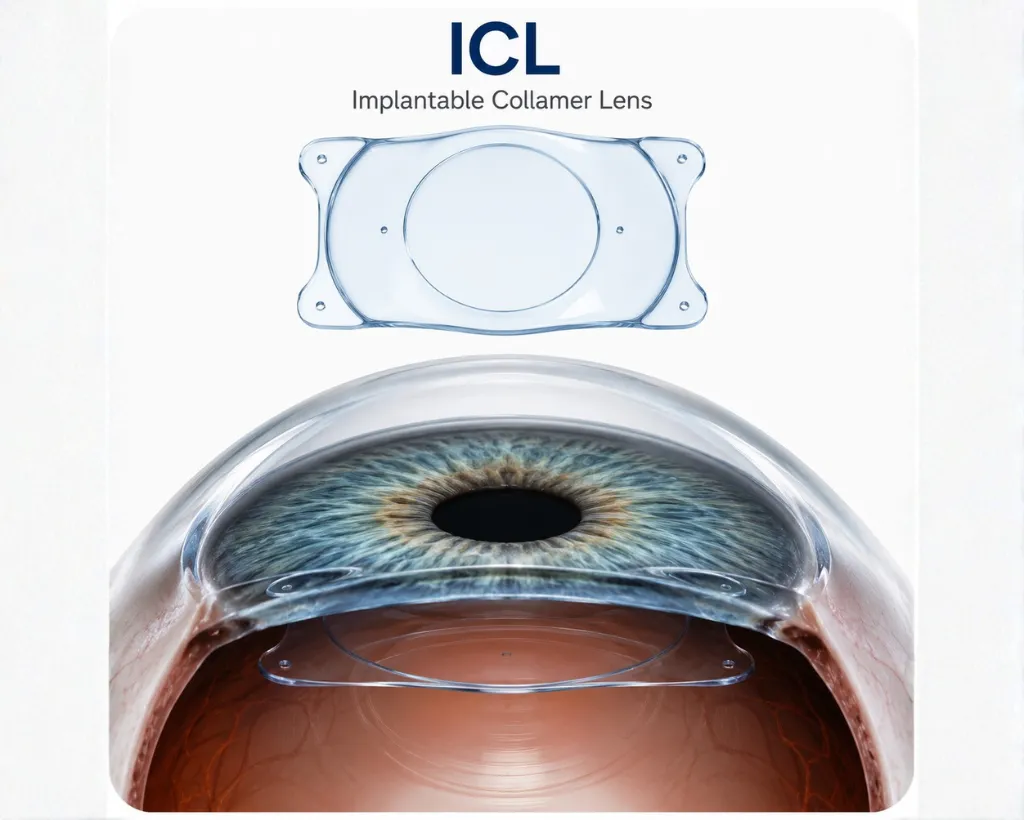
Implantable collamer lens surgery is a type of refractive eye procedure used to correct myopia, hyperopia, and astigmatism. During the procedure, a specially designed lens is placed between the natural lens and iris to improve focusing ability and visual clarity.
Unlike LASIK, the implantable collamer lens procedure does not permanently reshape the cornea, making it suitable for patients with thin corneas or high refractive errors.
At Vasu Eye Institute Bathinda, detailed eye evaluation is performed before recommending ICL eye surgery to ensure patient suitability and treatment safety.
Benefits of ICL eye surgery may include:
Many individuals prefer implantable collamer lens surgery because it offers advanced vision correction while preserving corneal structure.
At Vasu Eye Institute, modern technology and customised treatment planning help improve surgical precision and patient comfort.
The implantable collamer lens procedure is usually performed as a minimally invasive daycare surgery.
During the procedure:
Many patients ask whether ICL surgery is painful. Because anaesthetic eye drops are used, most patients experience minimal discomfort during surgery.
Questions regarding procedure duration are also common before ICL eye surgery. In most cases, the surgery takes a short time for each eye, although total treatment duration may vary depending on individual eye condition.
At Vasu Eye Institute Bathinda, experienced eye specialists use advanced surgical techniques for safe and precise ICL eye surgery outcomes.
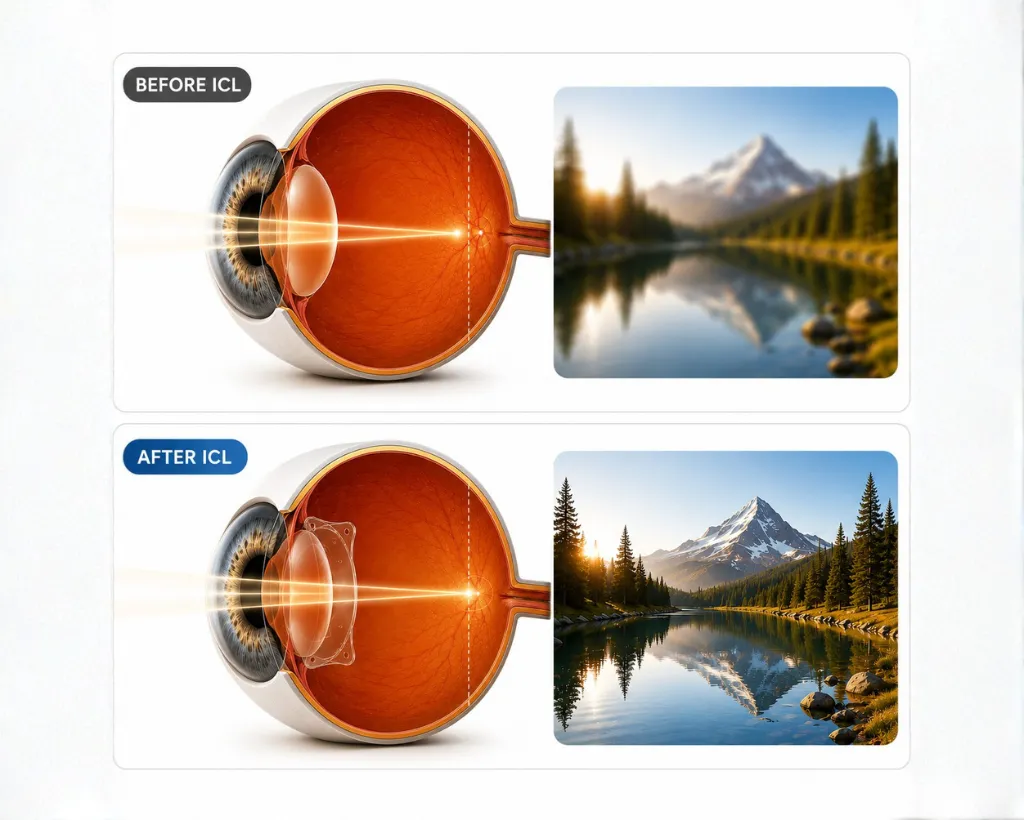
ICL surgery may be recommended for patients who:
Detailed consultation and advanced diagnostic testing help determine whether ICL eye surgery is the right option for long-term vision correction.
Patients exploring treatment options often look for experienced “ICL surgeons near me” to understand suitability, recovery, and long-term visual outcomes before surgery.
At Vasu Eye Institute, eye specialists carefully evaluate corneal thickness, eye power stability, retinal health, and overall eye condition before recommending implantable collamer lens surgery.
Recovery after ICL surgery is usually smooth when proper post-operative care instructions are followed.
Patients may notice:
After surgery, patients are advised to:
At Vasu Eye Institute, patients receive personalised recovery guidance and continuous monitoring after implantable collamer lens surgery.
Like all medical procedures, implantable collamer lens side effects may occur temporarily during recovery.
Possible temporary side effects may include:
Most symptoms improve gradually as the eyes heal. Regular follow-up visits help monitor recovery and ensure stable visual outcomes.
Long-term follow-up care and expert surgical monitoring are important parts of successful ICL eye surgery recovery and visual stability.
At Vasu Eye Institute, advanced diagnostic monitoring and expert post-operative care help support safer recovery and long-term vision protection.
The ICL eye surgery cost in Bathinda may vary depending on:
The overall cost of ICL eye surgery also depends on individual treatment requirements and the level of advanced diagnostic and surgical care involved.
At Vasu Eye Institute, patients receive transparent consultation regarding treatment suitability, expected outcomes, and procedure planning.
Vasu Eye Institute provides advanced refractive eye care with a focus on precision, safety, and personalised treatment planning.
Choosing the right hospital for ICL surgery near me is important because experienced specialists, proper follow-up care, and advanced diagnostic evaluation all contribute to safer visual outcomes.
Patients choose us because of:

Advanced technology, experienced specialists, and customised surgical planning help provide safer and more precise ICL eye surgery outcomes.
Implantable collamer lens surgery is a vision correction procedure where a specially designed lens is placed inside the eye to correct refractive errors such as myopia, hyperopia, and astigmatism without permanently reshaping the cornea.
ICL surgery is generally not painful because numbing eye drops are used before the procedure. Most patients experience mild pressure, temporary discomfort, or slight irritation during surgery and the early recovery phase.
Advanced diagnostic technology, experienced eye specialists, personalised treatment planning, and dedicated post-operative support are important factors when choosing a hospital for ICL eye surgery in Bathinda. Vasu Eye Institute focuses on comprehensive refractive eye care and patient safety.
Patients are usually advised to undergo detailed eye evaluation, follow medication instructions carefully, avoid contact lenses before testing if advised, and inform the doctor about their medical history before surgery.
During the implantable collamer lens procedure, a specialised lens is inserted inside the eye through a small opening and positioned behind the iris to improve vision correction and focusing ability safely.
ICL surgery usually takes a short time for each eye, although exact duration may vary depending on the patient’s eye condition, surgical planning, and whether both eyes are treated together.
Most patients notice visual improvement shortly after surgery. Temporary irritation, watering, blurry vision, or light sensitivity may occur initially, but recovery is generally smooth with proper medication use and follow-up care.
ICL surgery places a lens inside the eye without reshaping the cornea, while LASIK permanently reshapes the cornea using laser technology. Suitability depends on corneal thickness, eye power, and overall eye health.
Bhatti Rd, near Beri Wala Baba, Ganesh Nagar, Bathinda, Punjab 151001
Eye Care Timing: 9 AM to 3 PM
Skin Care Timing: 11 AM to 3 PM
+91 95014 43977
Vasu Eye Institute & Skin Centre
Typically replies within minutes
Any questions related to your eyes?
WhatsApp Us
🟢 Online | Privacy policy
WhatsApp us